
One of the first things I did when I got into biking, was thoroughly research bike maintenance. Naturally cleaning was a part of it. And I was lucky to be able to source a DVD wherein there was a segment showing how a Shimano tech would clean his bike; mentioning stuff to look out for, etc. etc.
I thought I’d share the procedure because it really is pretty simple to do, but not as straightforward if you want to maintain the longevity of your components.
Like I said, cleaning a bike is almost as straightforward as you would imagine it to be. Water and regular detergent will do the trick. The only time you have to be careful is when you clean any rotating part.
On Pressurized hoses
The quickest way to clean a bike would be with a pressurized hose. Anybody who’s had their bike soaked in mud would not deny this fact. However, it is also the most dangerous method of cleaning if not done properly.
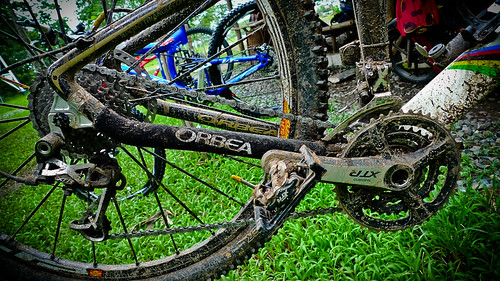
One of the cool things about our trips to La Mesa Nature Reserve is that they’ve got bike cleaning via pressurized hose for only 30 pesos (less than a dollar), the problem is that those who clean the bikes aren’t really people who are aware of how “sensitive” modern bike parts can be. In the DVD, the tech explains how you should never clean the hubs on your tires with a direct stream of water even on a hose – what more if you’ve got an industrial strength pressurized one.
After experiencing the hard way how the water on the pressurized hose decimated the lubrication on my remote lockout mechanism just after 3 washes. I would always tell the “cleaners” which parts to avoid and I’ll just clean them myself.
Quick summary
As a general rule I guess it’s safe to assume that do not, under any circumstance, use a direct spray at any lubricated part. Water still can (and will) seep through those bearings and compromise the life of the product. Having an adjustable nozzle will be a great investment (plus you can clean your car with it too!) so you can set the type of spray it gives and how strong it would be.
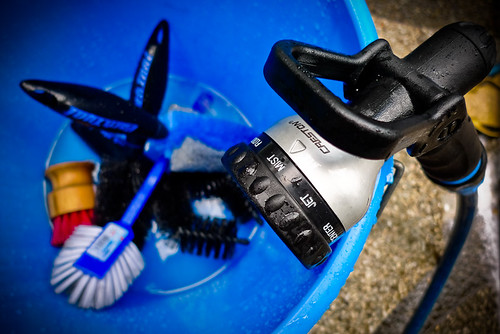
Just “rinse” the entire bike and brush it down with soapy water and a brush – instead of doing the tempting “water pik” dental method with pressurized water.
Here’s a video of how I hosed my bike:
When using degreaser (hopefully not too often) for your chain and cassettes, make sure you’re not hitting other parts that don’t need de-greasing – like your hubs; “sealed” bearings found in hubs/bottom brackets are usually not serviceable; once those hit the bucket you’ll have to replace them… so try not to compromise their lifespan as much as you could.
The general bike wash
I’m assuming the worst case: dirty bike meaning HARDENED MUD type of dirt.
- Inspect the bike, try to figure out which parts need major cleaning or just rinsing.
- Disconnect as much extras as you possibly can (chainstay guards, bottle holders, etc. etc). The goal is to expose as much of the bike’s frame, drivetrain, cockpit, and fork so you can properly scrub it down. I personally take the seatpost off as well – so I could clean right down to the collar (you’ll be surprised how mud can get lodged in that as well).
- Hose down your bike; wash the unsettled mud out easily and “soften” the hardened mud (if any)
- Take out both tires… set them aside
- Clean your bike as you would your car with your brush (or array of brushes if you’re like me), and water mixed with detergent. Having different types of brushes will help as some can get you into really tight places
- Hose down again and let your bike it air dry while you now move to your tires.
- You can probably go to town on the tires/rims themselves… just take care when you’re at your hubs. Then for the cassette you can even opt to use a degreaser for smoother action, must make sure you’re pointing it away from the actual bearings when you’re spraying it on the cogs.
- Hose down your tires.
- Clean whatever components you disconnected (possibly the same way above)
- “Reassemble” the bike and be happy.
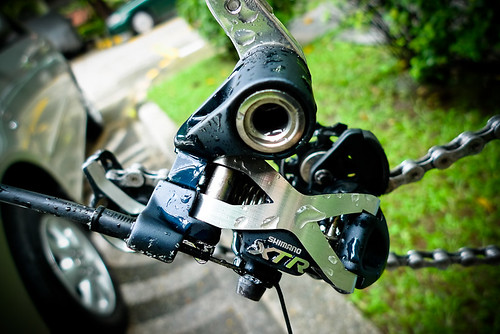
If you’re OC like me, when cleaning hydraulics brakes – I even take out the brake pads so I can make sure the calipers are clean right down to the pistons (as well as not contaminating the pads with soap while washing). This is optional but if you’re already cleaning your bike, might as well enjoy it and cover all bases right?
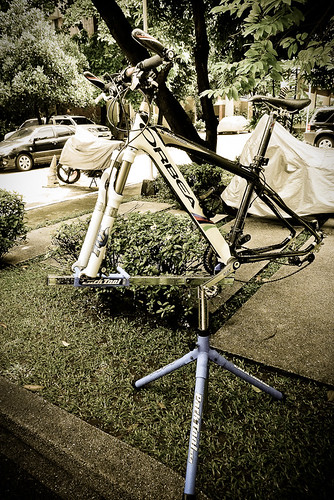
It’s also nice to have some sort of professional bike stand (pictured above) to keep the frame out of harms way when you have both your tires off.
When you’re bike’s assembled, put the seatpost last, because you’ll probably want to turn the bike upside-down quick to let whatever water that got into the frame via the seat tube drain out.
Thanks for the very detailed info! I have been using and cleaning bikes for years, even the motorized ones. What really irks my own OCness are the sprockets. Do you have a tool for this? Is it universal?
Paul, I believe is this what you’re looking for? You can get it sa Dan’s Bike Shop (they’re the supplier ng Park Tool stuff). I got two of them para one pang scrub then the other is always clean for last minute inspections 🙂